






POSTING DATE

category
AI, NLP
Natural Language Processing. It seems a simple enough explanation. The idea is to make computers sound like native speaking humans regardless of their language. Except there’s one problem. When we speak, we don’t follow our own rules of grammar. We use idioms, metaphors, abbreviations, and oftentimes use more body language to communicate than we realize.
So, what’s a poor machine to do when confronted with such an unstructured melee of data? Well, since semantics is not what you say it’s how you say it, we must teach computers to read between the lines. Of code. Enter NLP. The semantics of human language written for a machine to help make sense of our human behaviors gets organized.
The Perfect Imperfections of Language
Computers require structure. Natural language does not. Teaching machines how we communicate is no easy task, and yet we use machines that can do this every day.By combining technology and Machine Learning we begin to teach computers how to understand us. We teach them how to interpret and determine what it was we want done. When you’re asking Siri or Alexa a question, you’re helping them to learn how you ask, so they can better respond, and they make you more efficient. It’s a win-win for everyone.
In business, using NLP techniques to drive business decisions is even more important. Now, the computer must decide what information is the most valuable to pull from a pile of Data. Understanding our choices, our tone, even the words we choose to use, helps our machines learn what we want to do or need done.
Where is NLP Used?
Since we use different rules when we speak than when we write, our computers learn how we talk and how to use language more naturally. Wondering where NLP might be used? In a word or two? Nearly everywhere.You are scheduling a meeting and when it’s time, a calendar reminder pops into your phone which says estimated drive time to the meeting based on traffic conditions in your area. Or you ask Alexa to play your favorite music list from Pandora. Every touchpoint in this scenario is using NLP. We naturally might get into our car, ask our Virtual Assistant navigation system for directions, or to play our favorite music.
Our choices don’t fit in a box and may not be logical, but the more we teach the machines, the closer they may get to understanding the nuances of our language.
Here are 5 more ways we use NLP every day:
- Predictive text on your phone or in your Word document.
- Chatbots and Virtual Assistants to ensure customers are acknowledged in a timely manner, answer basic questions or redirect to appropriate personnel, and making suggestions to improve the customer experience.
- Curating social media feeds to determine customer needs and interest.
- Grammar correction software so our emails and business documents are error-free.
- Analyzing customer interactions using comments and reviews for customer feedback about a product or service.
There’s a ton of information to be filtered, sorted, sifted, and analyzed, and NLP is just one of the tools Data Scientists use.
Interested in the subfield of NLP? Check out this article for 6 techniques you need to know to get started. Already well-versed in the industry and looking for a new challenge?If you’re interested in Big Data and Analytics, Advanced Analytics, Life Sciences, Data Science, or any of our Data professional fields, we may have a role for you. Review our current vacancies or contact one of our expert consultants to learn more. For our West Coast Team, contact us at (415) 614 - 4999 or send an email to sanfraninfo@harnham.com. For our Mid-West and East Coast teams contact us at (212) 796-6070 or send an email to newyorkinfo@harnham.com.
Natural Language Processing. It seems a simple enough explanation. The idea is to make computers sound like native speaking humans regardless of their language. Except there’s one problem. When we speak, we don’t follow our own rules of grammar. We use idioms, metaphors, abbreviations, and oftentimes use more body language to communicate than we realize.
So, what’s a poor machine to do when confronted with such an unstructured melee of data? Well, since semantics is not what you say it’s how you say it, we must teach computers to read between the lines. Of code. Enter NLP. The semantics of human language written for a machine to help make sense of our human behaviors gets organized.
The Perfect Imperfections of Language
Computers require structure. Natural language does not. Teaching machines how we communicate is no easy task, and yet we use machines that can do this every day.By combining technology and Machine Learning we begin to teach computers how to understand us. We teach them how to interpret and determine what it was we want done. When you’re asking Siri or Alexa a question, you’re helping them to learn how you ask, so they can better respond, and they make you more efficient. It’s a win-win for everyone.
In business, using NLP techniques to drive business decisions is even more important. Now, the computer must decide what information is the most valuable to pull from a pile of Data. Understanding our choices, our tone, even the words we choose to use, helps our machines learn what we want to do or need done.
Where is NLP Used?
Since we use different rules when we speak than when we write, our computers learn how we talk and how to use language more naturally. Wondering where NLP might be used? In a word or two? Nearly everywhere.You are scheduling a meeting and when it’s time, a calendar reminder pops into your phone which says estimated drive time to the meeting based on traffic conditions in your area. Or you ask Alexa to play your favorite music list from Pandora. Every touchpoint in this scenario is using NLP. We naturally might get into our car, ask our Virtual Assistant navigation system for directions, or to play our favorite music.
Our choices don’t fit in a box and may not be logical, but the more we teach the machines, the closer they may get to understanding the nuances of our language.
Here are 5 more ways we use NLP every day:
- Predictive text on your phone or in your Word document.
- Chatbots and Virtual Assistants to ensure customers are acknowledged in a timely manner, answer basic questions or redirect to appropriate personnel, and making suggestions to improve the customer experience.
- Curating social media feeds to determine customer needs and interest.
- Grammar correction software so our emails and business documents are error-free.
- Analyzing customer interactions using comments and reviews for customer feedback about a product or service.
There’s a ton of information to be filtered, sorted, sifted, and analyzed, and NLP is just one of the tools Data Scientists use.
Interested in the subfield of NLP? Check out this article for 6 techniques you need to know to get started. Already well-versed in the industry and looking for a new challenge?If you’re interested in Big Data and Analytics, Advanced Analytics, Life Sciences, Data Science, or any of our Data professional fields, we may have a role for you. Review our current vacancies or contact one of our expert consultants to learn more. For our West Coast Team, contact us at (415) 614 - 4999 or send an email to sanfraninfo@harnham.com. For our Mid-West and East Coast teams contact us at (212) 796-6070 or send an email to newyorkinfo@harnham.com.
Author
Share this article
Industry Hub
Related
articles
With over 10 years experience working solely in the Data & Analytics sector our consultants are able to offer detailed insights into the industry.
Visit our Blogs & News portal or check out our recent posts below.

How Much Does an AI Engineer Make in the UK?
How Much Does an AI Engineer Make in the UK? AI Engineers are among the most sought-after…


How to Become an AI Engineer in the UK
How to Become an AI Engineer in the UK AI Engineering is one of the fastest-growing careers…

Why Fintech’s AI Talent Pool Is Smaller Than It Looks
By Luc Simpson-Kent, Business Manager – Harnham The share of US job postings requiring AI skills increased…

The Growing Demand for Commercially Driven Analysts
By Lauren McAlister, Senior Recruitment Consultant – Harnham A big trend we’re seeing in the analytics market…

AI Driven Data – Built in the North and Midlands | How Data Engineers are Using AI to Build Better Data Pipelines
Across organisations, AI is rapidly changing how data-driven teams operate, from how insights are generated to how…
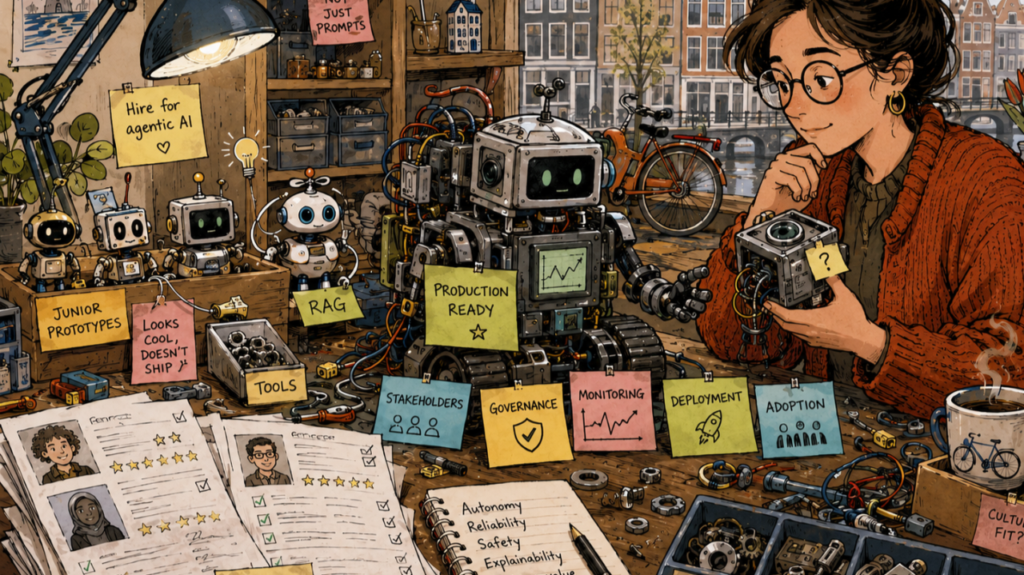
Hiring for Agentic AI in the Netherlands: What We’re Seeing
Recently, we’ve been running a few searches in the Netherlands for people with experience in agentic AI….
AI Driven Data – Built in the North and Midlands | AI in CRO and Experimentation
Across organisations, AI is rapidly changing how data-driven teams operate, from how insights are generated to how…

How Tri-State Insurers Are Using AI to Combat Rising Fraud in 2026
By Conor Larkin, Associate Vice President – Harnham Insurance fraud costs the U.S. industry over $40…

AI in Private Equity: How Talent Strategy Drives Portfolio Value Creation
by Nick Mandella, Director at Harnham. Most PE firms are investing in AI, but returns remain mixed….
How to Choose the Right AI Recruitment Agency in the US
Kyle Arriola, Harnham’s AVP of Data & AI Talent Acquisition, recently spoke with Simon Clarke, CEO of…