






POSTING DATE

category
Uncategorized
The last 18 months have accelerated the adoption of remote and flexible working. This in turn has created more opportunities for people with disabilities, a group that represents nearly one in five working-age adults. There have long been concerns about the disability employment gap in some of the fastest-growing sectors of the UK economy. In one of our most recent reports – Diversity in Data – we found that only 5 per cent of the UK’s Data & Analytics professionals have some form of disability – hidden or seen. While this rate has increased from 3.3 per cent the previous year, it is clear there is still a real issue with disabled representation in the industry, which is lagging far behind the national average. So, what more can the Data & Analytics industry do to create a diverse, inclusive and equitable working environment? Continue to implement flexibilityAs we embark on the “new normal”, businesses should continue to encourage remote and flexible ways of working. By allowing employees to work from home, necessary aspects of life, such as medical appointments, home visits or more regular breaks, can be accessed with ease. This creates an environment where employees can see that their physical and mental wellbeing is at the top of their employer’s priority list, increasing employee happiness and overall staff retention. Look at the layout of the officeFor those returning to the office, it’s crucial that leaders bear in mind different aspects of the building to ensure it is disability friendly. From step-free access to well-lit private rooms, noise-free areas and appropriate equipment, employers must consider all adjustments which may need to be made. Using tech to bring inclusivity Technology today can provide Data & Analytics business leaders with fantastic mobility, hearing and visual tools to accommodate and empower employees with disabilities to work in a manner that suits them best. Encouraging the use of voice-activated virtual assistants can allow employees with disabilities or physical conditions to place phone calls or send messages, access their calendar, set reminders and alarms, find definitions or follow the news. Collaboration apps also provide live captions and subtitles for attendees who have a hearing impairment. This ensures all employees can easily follow a meeting and all potential candidates can follow questions asked by the hiring manager during virtual interviews. Other options include narrator and dictation functionalities, which read out the contents of employees’ screens or sends emails. This helps those with low or impaired vision to easily communicate. Be open about mental and physical healthOne in four people in the UK will experience a mental health problem each year. During the pandemic, the statistic has skyrocketed. There are 14.1 million disabled people in the UK and sadly, disabled people are twice as likely to be unemployed compared to those who are not disabled. Business leaders must provide an inclusive and safe working environment for all. This can be done by encouraging open discussions, allowing for remote working or setting up voluntary employee resource groups which enable employees to discuss issues or to provide support to each other, as well as raise concerns with leadership as a collective voice. If you are looking to further promote inclusivity within your business, allow your employees to be more creative, innovative and productive as well as attract diverse candidates, speak to one of our expert consultants today.
Author
Share this article
Industry Hub
Related
articles
With over 10 years experience working solely in the Data & Analytics sector our consultants are able to offer detailed insights into the industry.
Visit our Blogs & News portal or check out our recent posts below.

How Much Does an AI Engineer Make in the UK?
How Much Does an AI Engineer Make in the UK? AI Engineers are among the most sought-after…


How to Become an AI Engineer in the UK
How to Become an AI Engineer in the UK AI Engineering is one of the fastest-growing careers…

Why Fintech’s AI Talent Pool Is Smaller Than It Looks
By Luc Simpson-Kent, Business Manager – Harnham The share of US job postings requiring AI skills increased…

The Growing Demand for Commercially Driven Analysts
By Lauren McAlister, Senior Recruitment Consultant – Harnham A big trend we’re seeing in the analytics market…

AI Driven Data – Built in the North and Midlands | How Data Engineers are Using AI to Build Better Data Pipelines
Across organisations, AI is rapidly changing how data-driven teams operate, from how insights are generated to how…
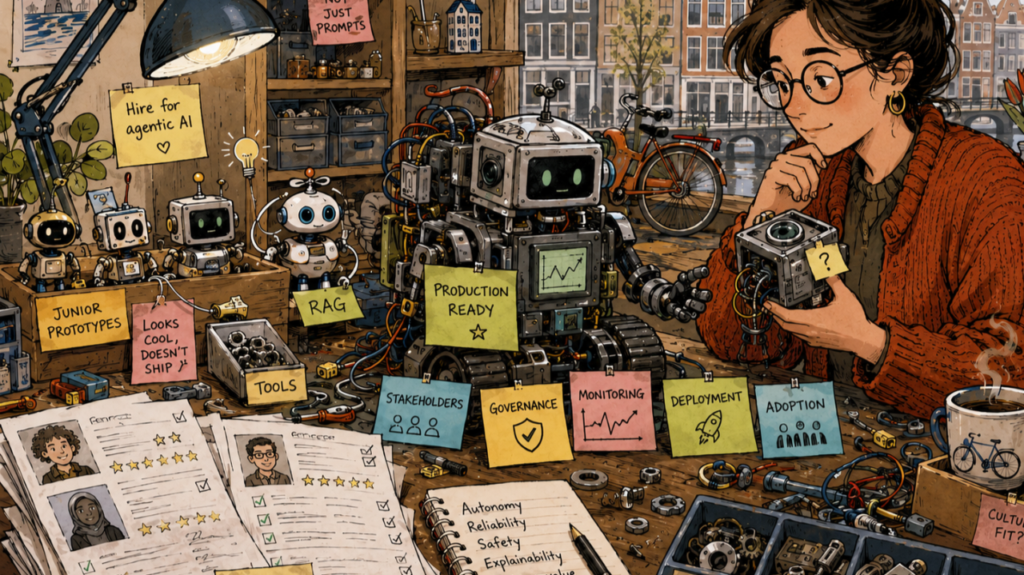
Hiring for Agentic AI in the Netherlands: What We’re Seeing
Recently, we’ve been running a few searches in the Netherlands for people with experience in agentic AI….
AI Driven Data – Built in the North and Midlands | AI in CRO and Experimentation
Across organisations, AI is rapidly changing how data-driven teams operate, from how insights are generated to how…

How Tri-State Insurers Are Using AI to Combat Rising Fraud in 2026
By Conor Larkin, Associate Vice President – Harnham Insurance fraud costs the U.S. industry over $40…

AI in Private Equity: How Talent Strategy Drives Portfolio Value Creation
by Nick Mandella, Director at Harnham. Most PE firms are investing in AI, but returns remain mixed….
How to Choose the Right AI Recruitment Agency in the US
Kyle Arriola, Harnham’s AVP of Data & AI Talent Acquisition, recently spoke with Simon Clarke, CEO of…